
Starting primary school is one of the biggest milestones in a child's early years. It's exciting, emotional and, for many families, filled with questions.
"Is my child ready?"
"Should they already know how to read?"
"What if they're shy?"
"Will they cope with the routine?"
The truth is, school readiness is about much more than recognising letters or counting to 100.
At Nurtured Education & Care, located at 8 Monash Road, Gladesville NSW 2111, we work with families across Gladesville, Ryde, Hunters Hill, Putney, Meadowbank, Tennyson Point, Boronia Park and surrounding communities to help children build the confidence, resilience and life skills they need to thrive when they start school.
Rather than rushing children towards academic milestones, our School Readiness Program focuses on developing the whole child—supporting their emotional wellbeing, independence, communication and curiosity through meaningful, play-based learning.
What Does School Readiness Actually Mean?
Many parents assume school readiness means a child can write their name, recognise numbers or recite the alphabet.
While these skills are certainly helpful, they're only one part of the picture.
True school readiness includes a combination of social, emotional, physical and cognitive development that allows children to confidently participate in everyday school life.
A school-ready child is learning to:
- Follow simple routines and instructions.
- Express their thoughts and feelings.
- Build friendships and work with others.
- Solve small problems independently.
- Manage everyday tasks like opening a lunchbox or packing away belongings.
- Stay focused during group activities.
- Adapt to new environments and experiences.
These abilities often have a greater impact on a child's success in their first year of school than academic knowledge alone.
Why Emotional Readiness Is Just as Important as Academic Readiness
Starting school introduces many new experiences.
Children meet unfamiliar teachers, make new friends, navigate larger playgrounds and follow more structured routines.
Being able to recognise and manage emotions plays a significant role in helping children adapt to these changes.
Developing emotional regulation means children gradually learn how to:
- cope with frustration;
- wait patiently for their turn;
- ask for help when needed;
- recover from disappointment;
- manage separation from parents; and
- build confidence in unfamiliar situations.
At Nurtured Education & Care, educators support emotional development through everyday conversations, guided play, storytelling and positive relationships. Children are encouraged to identify their emotions, solve problems together and develop confidence in a safe, supportive environment.
Independence Builds Confidence
One of the biggest adjustments children face when they begin Kindergarten is becoming more independent.
Teachers simply cannot assist every child with every task throughout the day.
Helping children practise everyday life skills before school can make a significant difference to their confidence.
These include:
- opening and closing lunchboxes;
- unpacking and packing their school bag;
- washing hands independently;
- managing toileting routines;
- dressing themselves;
- putting on hats and shoes;
- recognising their belongings.
These seemingly small achievements help children feel capable and reduce unnecessary stress during those first few weeks of school.
Learning Through Play Is Still Learning
Some parents worry that if children spend their preschool years playing, they won't be academically prepared.
Research consistently shows the opposite.
Play-based learning provides children with countless opportunities to develop the skills they'll rely on throughout their education.
For example:
Building Blocks
Children explore:
- early mathematics
- problem-solving
- spatial awareness
- persistence
- teamwork
Dramatic Play
Whether pretending to run a café or play teacher, children strengthen:
- communication
- creativity
- language development
- emotional understanding
- social confidence
Outdoor Play
Climbing, balancing and running develop:
- coordination
- gross motor skills
- resilience
- confidence
- risk assessment
Arts and Crafts
Drawing, painting and cutting strengthen:
- fine motor skills
- hand control
- creativity
- concentration
These experiences create strong foundations for later literacy and numeracy learning while allowing children to enjoy being children.
Literacy Starts Long Before Reading Books Independently
Early literacy is about much more than reading words.
Children build literacy every day through conversation, songs, storytelling, rhymes and play.
At Nurtured Education & Care, children are introduced to literacy through engaging programs including Reading Eggs and PreLit, alongside shared stories, phonics activities and language-rich experiences.
These activities help children develop:
- vocabulary;
- listening skills;
- phonological awareness;
- letter recognition;
- comprehension;
- confidence with language.
Because learning happens in enjoyable, meaningful ways, children often develop a genuine love of reading before they even enter Kindergarten.
Numeracy Happens Naturally Throughout the Day
Similarly, mathematics doesn't begin with worksheets.
Children encounter mathematical thinking through everyday experiences.
They learn to:
- count objects;
- compare sizes;
- recognise shapes;
- identify patterns;
- estimate quantities;
- solve simple problems.
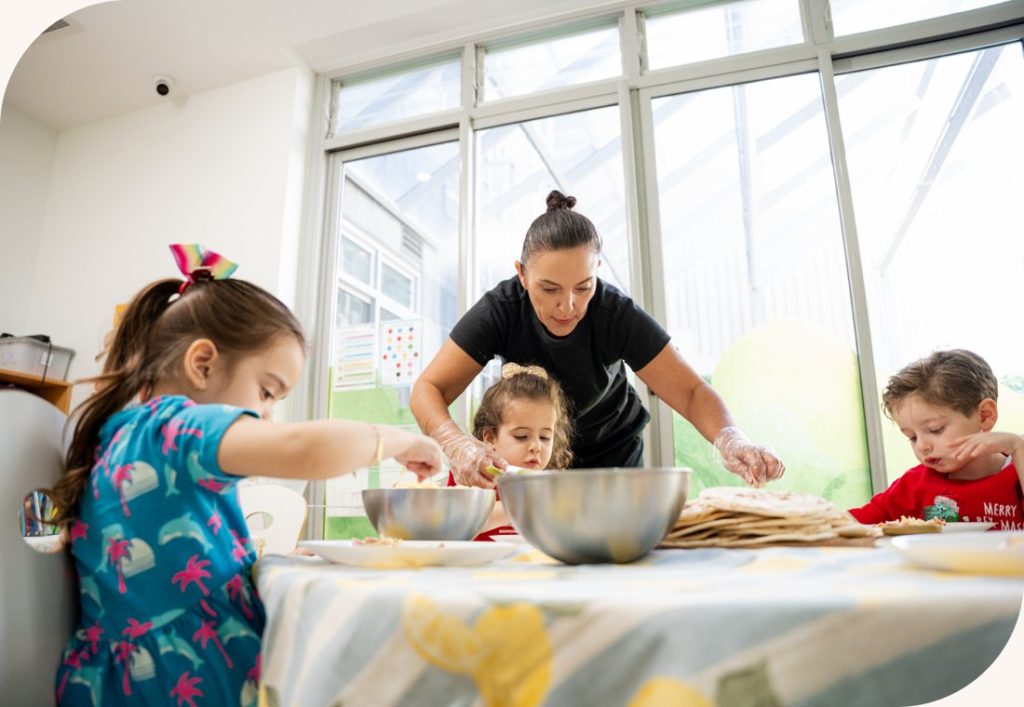
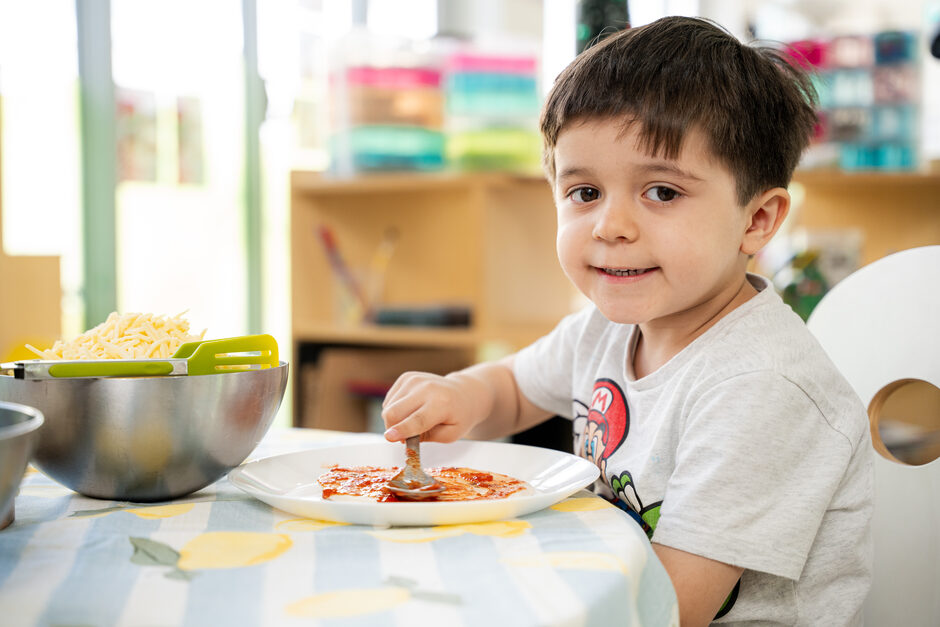
Cooking experiences, block play, puzzles, outdoor games and group activities all introduce mathematical concepts in ways that feel natural and enjoyable.
Social Skills Matter Every Day at School
The classroom is a social environment.
Children need opportunities to build relationships, cooperate with peers and navigate everyday interactions.
Throughout our School Readiness Program, children practise:
- sharing resources;
- taking turns;
- listening respectfully;
- joining group play;
- resolving small conflicts;
- working together on projects;
- showing empathy.
These experiences help children develop confidence in forming friendships, which is often one of the biggest concerns for parents before school begins.
Building Fine and Gross Motor Skills
Strong motor development supports many everyday school activities.
Fine motor skills help children:
- hold pencils;
- use scissors;
- draw shapes;
- manipulate classroom resources.
Gross motor skills help children:
- sit comfortably during group time;
- participate in sport;
- climb playground equipment safely;
- maintain posture for learning.
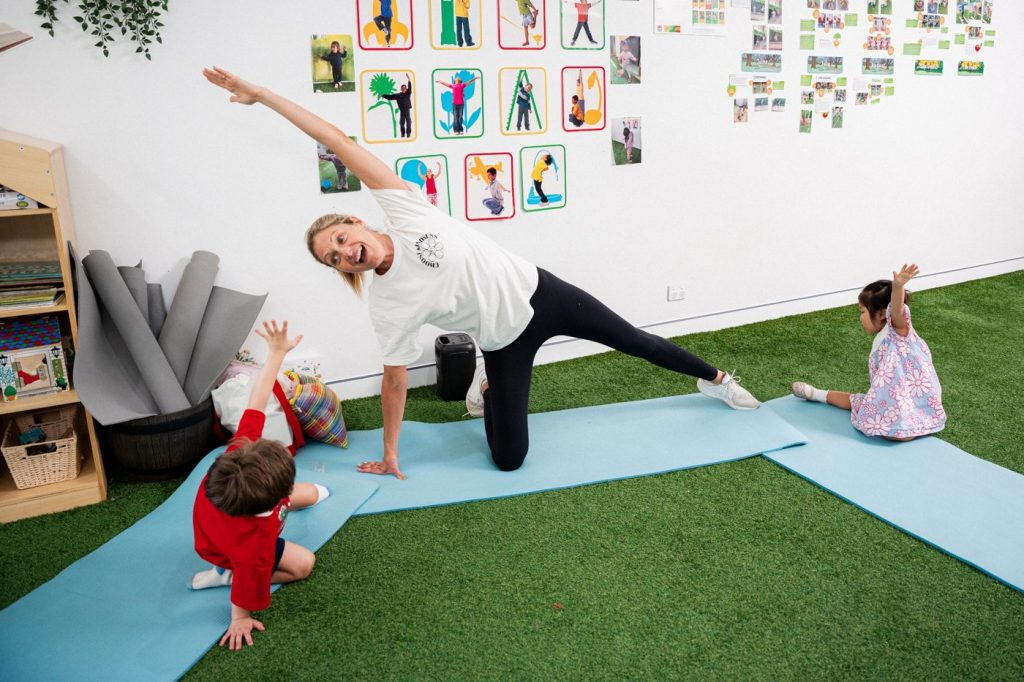
Children strengthen these skills through activities including climbing, dancing, threading, drawing, balancing, construction play and outdoor exploration.
School Readiness Is a Partnership Between Families and Educators
Preparing for school works best when families and educators work together.
At Nurtured Education & Care, we keep families informed about their child's progress through ongoing communication, observations and school readiness discussions.
We also provide practical suggestions families can continue at home, including:
- encouraging children to dress themselves;
- reading together every day;
- practising opening lunch containers;
- talking positively about school;
- encouraging independence during daily routines;
- allowing children to solve simple problems themselves.
Small moments at home often have a lasting impact.
Supporting Every Child's Individual Journey
Every child develops differently.
Some children are naturally outgoing.
Others take time to warm up.
Some love numbers.
Others enjoy storytelling, art or imaginative play.
There is no single checklist that determines whether a child is "ready."
Instead, educators observe children's progress across multiple areas of development and work closely with families to provide personalised support where needed.
When additional assistance may benefit a child, we collaborate with families and, where appropriate, allied health professionals such as speech pathologists, occupational therapists and child health specialists.
Early support helps children build confidence before challenges become barriers.
Questions to Ask When Choosing a School Readiness Program
If you're exploring childcare or preschool options in Gladesville, Ryde or the surrounding suburbs, consider asking:
- How do educators support emotional development?
- How is independence encouraged?
- What literacy and numeracy experiences are offered?
- Is learning play-based?
- How are children prepared for local primary schools?
- How are families involved?
- How are developmental milestones monitored?
- How are children's individual strengths supported?
The answers can provide valuable insight into how well a centre prepares children for life beyond preschool.
Helping Children Feel Excited About Their Next Adventure
Starting school shouldn't feel like a giant leap.
With the right environment, caring educators and consistent support, children can approach this milestone with curiosity, confidence and excitement.
At Nurtured Education & Care, our School Readiness Program helps children build the practical skills, emotional resilience and love of learning that will support them well beyond their first day of Kindergarten.
Whether your family lives in Gladesville, Hunters Hill, Ryde, Putney, Meadowbank, Tennyson Point, Boronia Park or nearby, we're here to support your child's journey every step of the way.
Frequently Asked Questions
What age should children begin preparing for school?
School readiness begins long before the year before Kindergarten. Children develop important social, emotional and communication skills through everyday play and experiences from around three years of age.
Does my child need to know how to read before starting school?
No. Most primary schools focus on children recognising letters, enjoying books, listening to stories and developing early literacy skills. Confidence, communication and curiosity are often more important than reading independently.
What is play-based learning?
Play-based learning uses meaningful activities such as building, storytelling, outdoor exploration and imaginative play to help children develop literacy, numeracy, problem-solving, creativity and social skills naturally.
How can I support school readiness at home?
Reading together, encouraging independence, talking positively about school, practising everyday routines and allowing children opportunities to solve problems independently all help build school readiness.
Where can I find a school readiness program near Gladesville?
Nurtured Education & Care, located at 8 Monash Road, Gladesville NSW 2111, offers a comprehensive School Readiness Program designed to help children transition confidently into primary school through play-based learning, early literacy, independence and emotional development.
Ready to Help Your Child Take Their Next Big Step?
If you're looking for a nurturing early learning centre that prepares children for a confident transition to school, we'd love to welcome you to Nurtured Education & Care.
📠8 Monash Road, Gladesville NSW 2111
📞 (02) 9804 6553
Book a tour today and discover how our School Readiness Program helps children build the confidence, skills and curiosity they need to thrive in primary school and beyond.